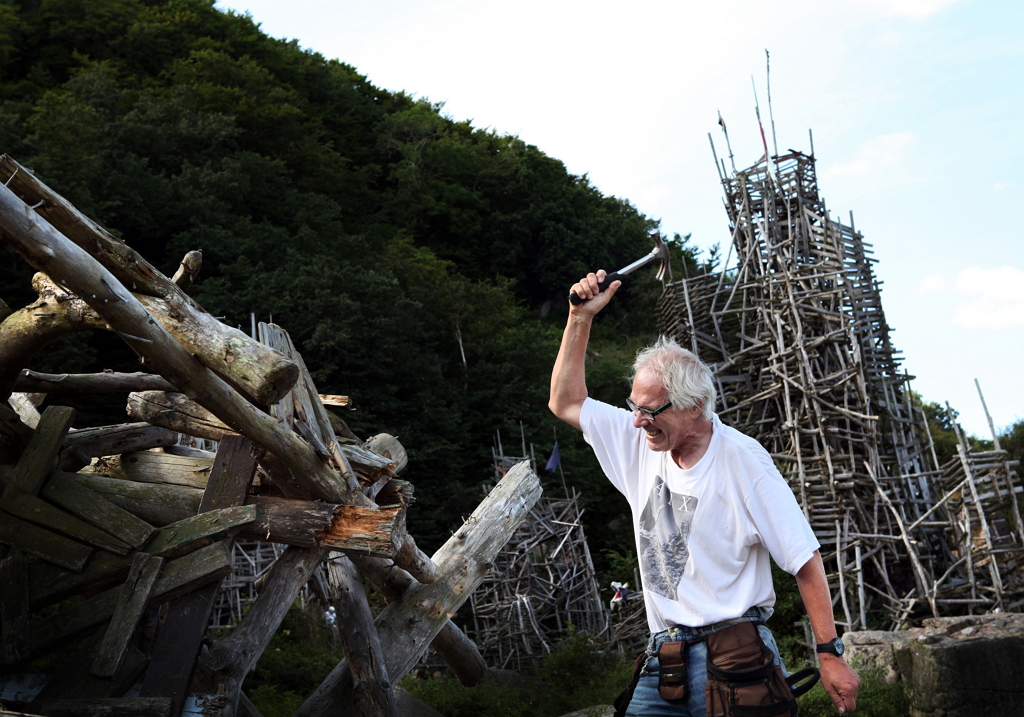
On July 30. 1980, Lars Vilks began building a series of sculptures made of driftwood in the nature reserve Kullaberg, in the northwest corner of county Skåne. A few days later the sculpture was named “Nimis”. Vilks worked on the sculpture for two years before it was “discovered” by the local authorities in 1982.
Once it was “discovered”, a series of legal battles began that went on and off until 2004.
Although there were ongoing court cases, Vilks continued working on and expanding Nimis until it included multiple towers and the towers were connected by a massive wooden labyrinthe that allows visitors to climb down from the side of the mountain to the shore.

After more than a decade of legal battles with the authorities in Sweden over the existence of the artworks Nimis and Arx in the Kullaberg Nature Reserve.
Ladonia declared its independence and sovereignty on 2 June 1996…
Where is Ladonia?
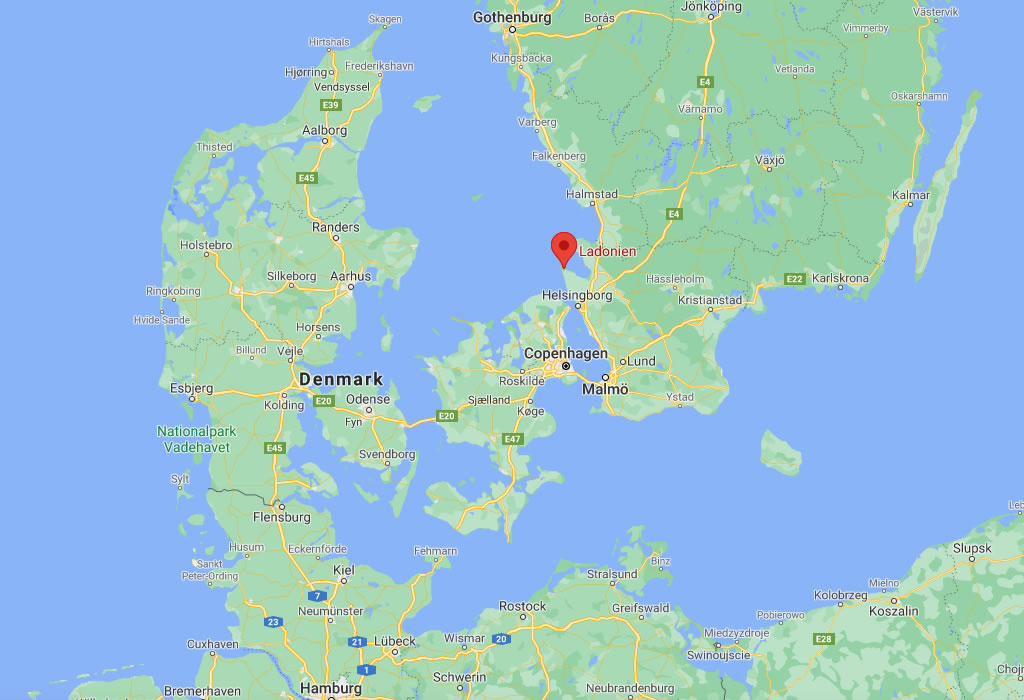
Ladonia is situated on the very southern edge of the Scandinavian Peninsula, somewhat between the Swedish towns of Mölle and Arild. The map coordinates of Ladonia are 56° 17′ 15″ N, 12° 32′ 22″ E. On many Google Maps, Ladonia is marked simply as “Nimis” or “Ladonien”.
If you want to know more about the area, visit our tourist information page.
Ancient History/Creation Myth
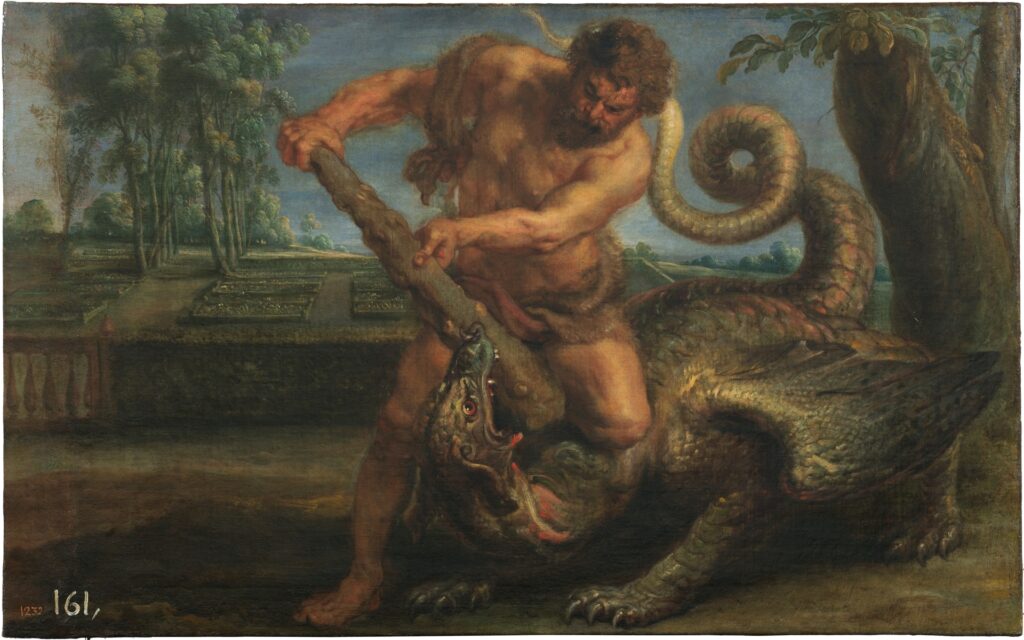
There was a legend of a garden in the very far west where the dragon Ladon guarded the golden apples of the Hesperides, apples that gave immortality. The myths tell us that Ladon was eventually slain by Hercules, and thus immortality was placed in the world and that event introduced tension between mortal and immortal time.
Recent History
Ladonia was proclaimed independent on the 2nd of June, 1996, by Lars Vilks. Starting in 1980, Vilks had been creating sculptures in wood (Nimis) and concrete (Arx) in the Kullaberg Nature Reserve in the south of Sweden. The Swedish authorities spent more than a decade trying to force the sculptures to be taken down or destroyed. See our Timeline
In 1996, most of the legal battles had been resolved one way or another, and the sculptures still stood. So, Vilks concluded that he had achieved a permanent occupation of the land and de facto control thereof. To further protect the sculptures from threat of demolition, he proclaimed the land on which they stand as “Ladonia”, a sovereign country with a surface of 1 square km. At the time he named himself Chancellor of Ladonia and announced a government comprised of several ministers.
In 1997, when the number of citizens had grown to more than 1,000, elections were held. Ladonia became a Republican Monarchy with a president, Fernando Rodrigues (1997–2004) living in Brazil and a queen, Ywonne I (1997–2011) living in Sweden.
At the last census in January 2020, Ladonia had 22,858 registered citizens and more than 125 ministries.
Fun Facts and National Symbols
- The National Anthem of Ladonia is the sound of throwing a stone into water.
- The Ladonian language consists of two words: “waaaaalll” and “ÿp”.
- The currency is Örtug, 1 Örtug is around 10 Swedish Krona or 1 Euro.
- Ladonia has its own time zone (LST – Ladonia Standard Time) which is UTC/GMT +0:57
(Three minutes slower than neighboring Sweden) - The Constitution of Ladonia explicitly excludes men from the throne. There has not been, nor will ever be, a King of Ladonia. Only Queens.
See National Symbols & Currency for additional information.
- In January 2020, at the last census, Ladonia had 22,858 registered non-resident citizens.
- In 2019, the Constitution was changed and converted the Presidency into a Prime Minister position elected from within the Cabinet (legislature).
- The Prime Minister is Frans Brood, living in Germany.
- The monarch is HM The Queen Carolyn, living in the USA.
See Ladonian Government for additional information about the government, elected officials and ministries.
See The Monarchy for information on the Queen, the Royal Family, and the Nobility.